
Pelargonium Radula Botanical Card
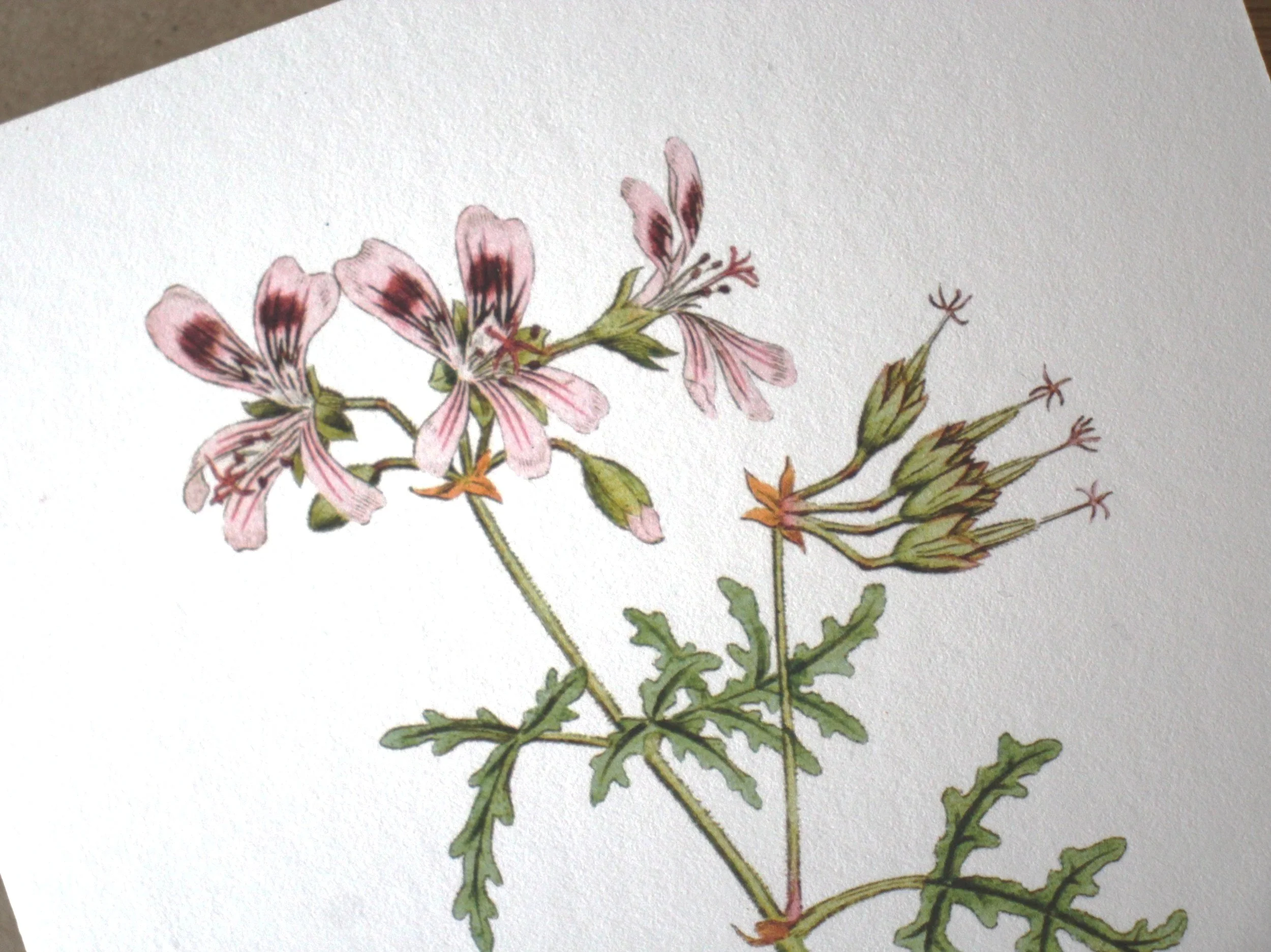
A botanical print from the 1790’s on a card makes a nice greeting for someone who appreciates pelargoniums.
This Pelargonium Radula print was originally published in 1790 in Lambeth Marsh, London, by W. Curtis, in "The Botanical Magazine; or Flower-Garden Displayed.
Pelargonium radens was discovered by Francis Masson, the Scottish botanist while exploring native flora at the Cape. The plant was sent to the gardens of Kew in 1774, where it became known as P. radula. The name was changed to P. radens by H.E. Moore because it got mixed up with the cultivar P radula, which is derived from P. graveolens with slightly thicker leaf segments and is rose-scented.
This plant is an upright branching shrub with soft green stems that become woodier as it matures. Its pink flowers have purple-pink veins on the upper petals.
Essential oil can be extracted from the rough triangular greyish green finely divided leaves, which can be used in flavoring and perfume.
In my shop, this pelargonium card is printed on premium 100% cotton fiber, natural white paper with a semi-smooth texture.